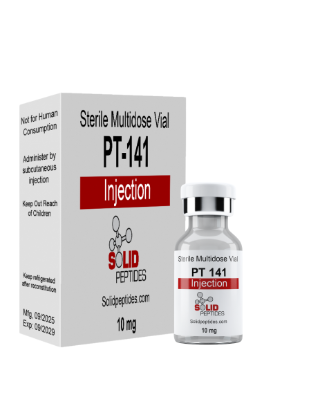
PT-141 (Bremelanotide) - Cyclic heptapeptide MC3R/MC4R agonist for melanocortin receptor research. ≥98% purity. CAS 189691-06-3. For laboratory research use only.
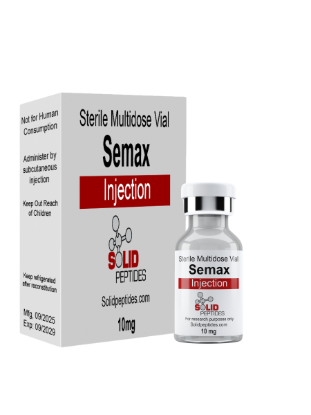
ACTH(4-10) Heptapeptide Analogue: Met-Glu-His-Phe-Pro-Gly-Pro (MEHFPGP); ≥98% purity by HPLC; Pro-Gly-Pro C-terminal extension confers enhanced metabolic stability vs. native ACTH(4-10)
Multi-Pathway Neurotrophin Research: BDNF upregulation (1.4× protein, 3× mRNA in hippocampus at 50 μg/kg), serotonergic modulation (180% extracellular 5-HIAA), copper chelation (K_D 1.3×10⁻¹⁵ M), anti-amyloid activity
800+ Peer-Reviewed Publications: Neuroprotection, cerebrovascular, neurotrophic factor, and transcriptomic ischemia research; registered pharmaceutical in Russia since 2011
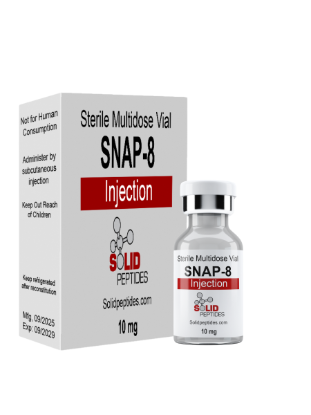
SNAP-8 octapeptide SNARE complex modulator. Ac-Glu-Glu-Met-Gln-Arg-Arg-Ala-Asp-NH₂ sequence, SNAP-25 fragment analog. C₄₁H₆₅N₁₅O₁₆S, ~1075 Da, CAS 868844-74-0. ≥98% purity. Lab research only.
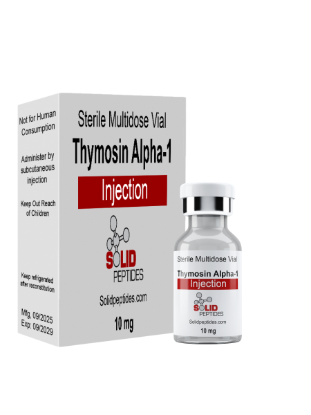
Broad Clinical Investigation: Thymalfasin (Zadaxin) — pharmaceutical with this amino acid sequence — is approved in 35+ countries; clinical investigation in COVID-19 lymphocytopenia (Liu et al., 2020), sepsis immunology meta-analyses (Liu et al., 2016; Tian et al., 2025), HBV/HCC biology, and vaccine adjuvancy research
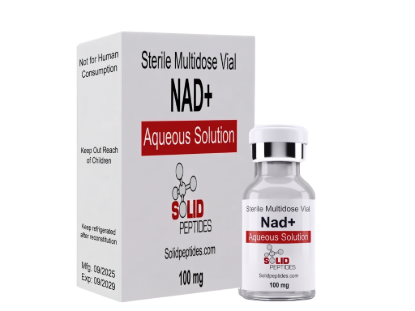
Universal Redox Coenzyme: Central to 500+ enzymatic reactions, glycolysis, citric acid cycle, electron transport chain, 80,000+ PubMed publications since 1906 discovery
Sirtuin/PARP/CD38 Substrate: Essential cofactor for SIRT1-7 longevity proteins, PARPs for DNA repair, CD38 calcium signaling; NAD+ declines 10-65% with aging across tissues
Clinical Development: Multiple Phase 2 RCTs showing 2.6-3.1x NAD+ increases with precursor supplementation, benefits in metabolic disease, cognition, long COVID, well-tolerated safety profile
GHK-Cuis a research peptide composed of the tripeptide sequence Gly-His-Lys bound to copper(II) ions, forming a biologically active peptide–metal complex studied for its role in extracellular matrix modulation and cellular signaling. Preclinical research indicates that GHK-Cu regulates collagen production, gene expression, and enzymatic antioxidant pathways through copper-mediated redox mechanisms. It serves as a model compound for investigating peptide-driven tissue remodeling, metalloprotein r